
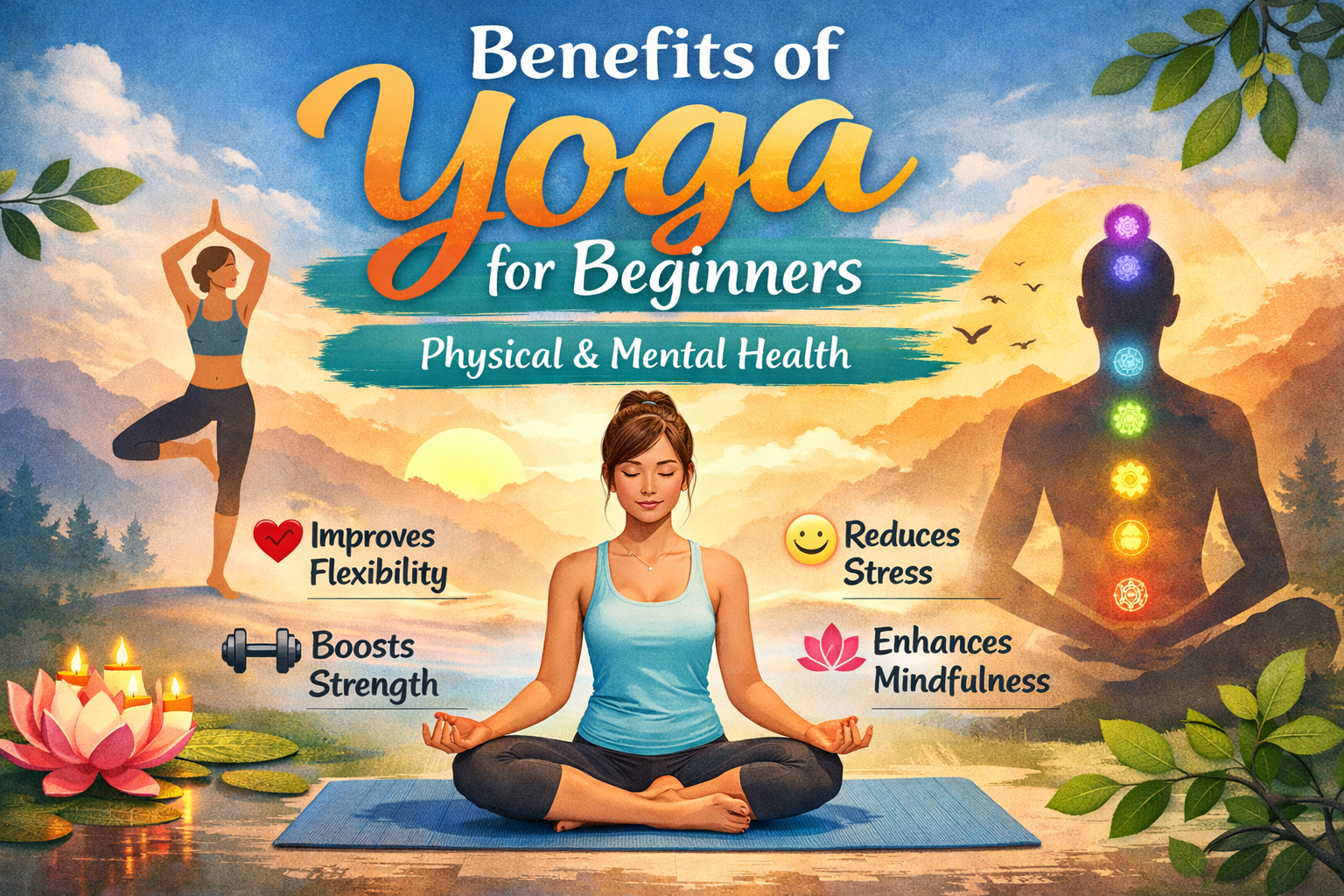
Yoga offers beginners a simple way to improve physical strength, flexibility, and balance while also supporting mental calm and focus. Regular practice can help reduce everyday stress, build body awareness, and create healthier habits for both physical and mental well-being.

Yoga gently works the muscles and joints without putting heavy pressure on the body. This makes it suitable for people of different fitness levels.
Improves Flexibility
- Helps stretch tight muscles
- Increases range of motion over time
- Reduces stiffness in the neck, back, and legs
- Makes daily movements easier, such as bending or walking
Flexibility improves slowly. Beginners should focus on comfort, not depth of poses.
Builds Strength
- Strengthens arms, legs, and core muscles
- Uses body weight instead of machines
- Supports joint stability
- Helps maintain balance and posture
Simple poses like plank, chair pose, and warrior pose help build strength safely.
Supports Better Posture
- Increases awareness of body alignment
- Strengthens back and abdominal muscles
- Reduces slouching from long sitting hours
- Encourages upright and relaxed posture
Better posture can help prevent common aches and pains.
Improves Balance and Coordination
- Trains body awareness
- Helps prevent falls
- Builds confidence in movement
- Enhances stability in daily activities
Standing poses and slow movements are especially helpful for balance.
Mental Health Benefits of Yoga for Beginners

Yoga is not only physical exercise. It also supports emotional and mental health.
Reduces Stress
- Encourages slow and deep breathing
- Helps release physical tension
- Creates a calming routine
- Supports relaxation after a busy day
Even short yoga sessions can help beginners feel less overwhelmed.
Improves Focus and Concentration
- Teaches attention to breath and movement
- Reduces distractions
- Builds mindfulness
- Helps improve memory and awareness
This can be useful for students and working professionals.
Supports Emotional Balance
- Encourages calm reactions
- Helps manage everyday worries
- Promotes positive mood
- Builds patience and self-control
Yoga is often used as part of stress management routines.
Encourages Better Sleep
- Helps relax the nervous system
- Reduces restlessness
- Supports bedtime routines
- Improves overall sleep quality
Gentle evening yoga can be helpful for people with busy schedules.
Lifestyle Benefits for Beginners

Yoga can positively influence daily habits and lifestyle choices.
Builds Healthy Routine
- Encourages daily movement
- Creates time for self-care
- Improves consistency
- Supports long-term wellness
Increases Body Awareness
- Teaches how the body feels during movement
- Helps notice tension early
- Encourages mindful posture
- Improves connection between mind and body
Suitable for All Ages
- Can be modified for different abilities
- Does not require special equipment
- Can be practiced at home
- Fits into busy schedules
How Yoga Supports Overall Well-Being

Yoga works on multiple levels:
- Physical movement improves muscle health
- Breathing improves oxygen flow
- Relaxation calms the mind
- Mindfulness improves emotional control
Together, these help beginners feel healthier and more balanced.
To understand poses and breathing methods, beginners can start with “Yoga for Beginners: The Ultimate Guide to Yoga Basics” as a foundation for safe practice.
Practical Tips for Beginners
- Start Slow
Practice 10–20 minutes per session. Avoid long or intense routines at first. - Choose Beginner-Friendly Poses
Focus on simple poses like:
- Mountain pose
- Cat-cow pose
- Child’s pose
- Downward dog
- Seated stretch
- Mountain pose
- Breathe Normally
Do not hold your breath. Keep breathing slow and steady. - Listen to Your Body
Stop if you feel pain or discomfort. Yoga should feel gentle and controlled. - Practice Regularly
Aim for 2–3 times a week at first. Consistency matters more than intensity. - Use Comfortable Clothing and Space
Wear loose clothes and practice on a flat surface with enough room to move. - Follow Trusted Beginner Guides
Learn basics from reliable sources like “Yoga for Beginners: The Ultimate Guide to Yoga Basics.”
Mistakes or Limitations (if relevant)
Common Mistakes Beginners Make
- Pushing too hard into poses
- Skipping warm-up or cool-down
- Comparing progress with others
- Ignoring body discomfort
- Practicing without basic guidance
Limitations to Keep in Mind
- Yoga results take time
- Not a replacement for medical care
- Some poses may not suit everyone
- Needs regular practice for noticeable change
Yoga should be part of a healthy lifestyle, not treated as a quick solution.
FAQ
Yoga helps beginners improve flexibility, balance, and posture while also supporting stress reduction and mental calm.
Beginners can practice 2–3 times per week or even 10–20 minutes daily for gradual improvement.
Yes, yoga uses breathing and slow movement to help relax the mind and body.
No. Yoga helps build flexibility over time and can be adapted for all body types.
Yoga is generally low-impact and beginner-friendly when basic poses and proper guidance are followed.
Quick Summary
Yoga offers beginners simple physical and mental health benefits. It improves flexibility, strength, balance, and posture while helping reduce stress, improve focus, and support emotional well-being. Starting with basic poses and short sessions builds a healthy habit. With regular practice and guidance from resources like “Yoga for Beginners: The Ultimate Guide to Yoga Basics,” beginners can safely enjoy yoga as part of a balanced lifestyle.
