
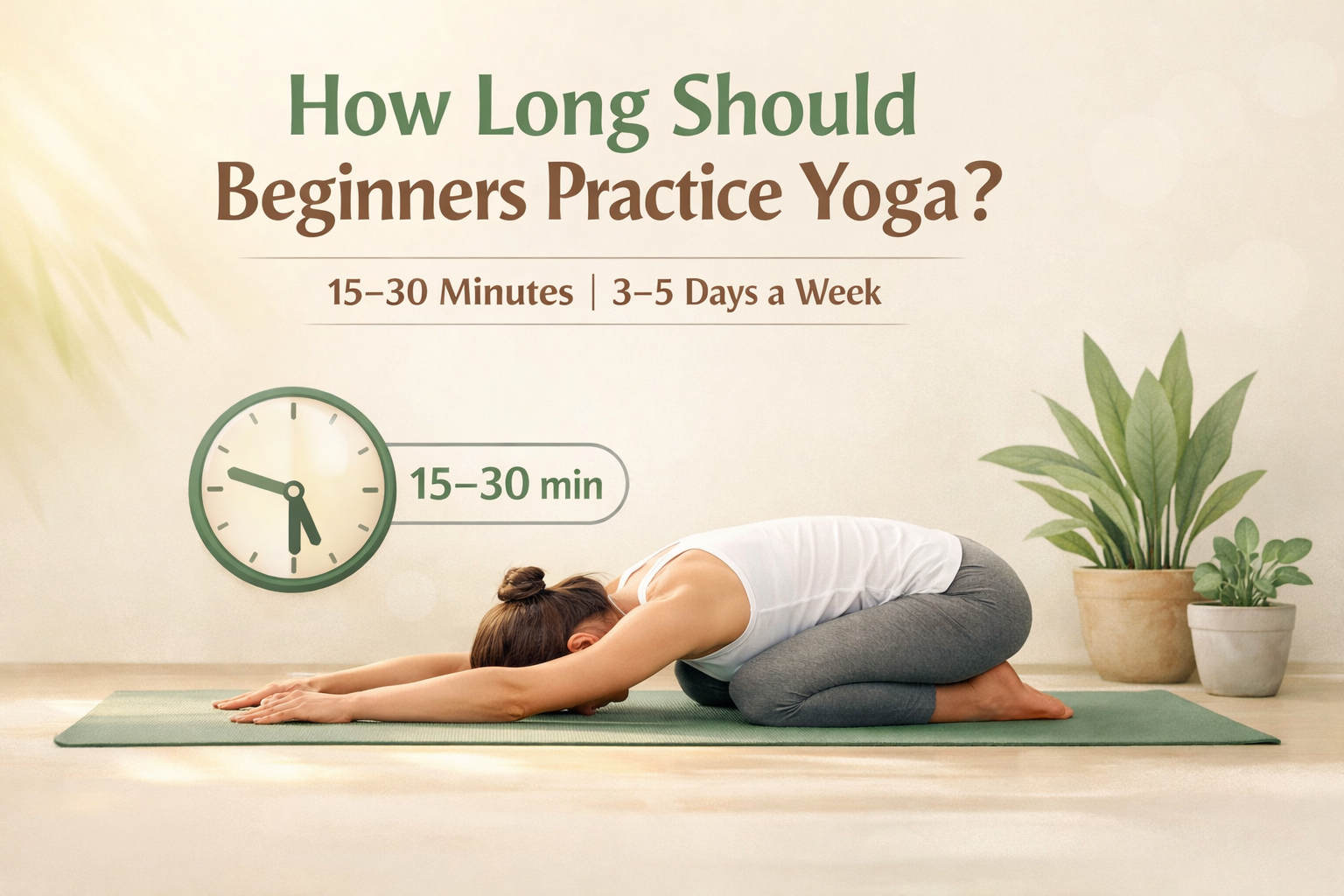
Beginners should practice yoga for 15 to 30 minutes per session, about 3 to 5 times a week, for best results. This amount of time helps improve flexibility, posture, and relaxation without overworking the body. Consistency is more important than long or intense sessions.
Many beginners ask how long they should practice yoga to see real benefits. The simple answer is: start small and stay regular. Yoga is not about pushing the body hard from the first day. It is about learning basic movements, breathing correctly, and building a healthy habit over time.
Short sessions allow beginners to understand poses safely and avoid injury. As the body becomes more flexible and comfortable, practice time can slowly increase. Everyone is different, so the best duration depends on personal comfort, daily schedule, and goals such as flexibility, stress relief, or general fitness.
Before deciding on practice time, it is important to understand yoga basics like posture, breathing, and relaxation. You can learn more from this internal resource:
Yoga for Beginners: The Ultimate Guide to Yoga Basics
Recommended Yoga Duration for Beginners
For most beginners, the ideal yoga duration looks like this:
- Week 1–2: 10 to 15 minutes per session
- Week 3–4: 15 to 25 minutes per session
- After one month: 20 to 30 minutes per session
- Frequency: 3 to 5 days per week
This time range is enough to:
- Warm up the body
- Practice basic poses
- Focus on breathing
- End with relaxation
Long sessions are not required at the beginning. Short sessions are easier to maintain and reduce the risk of strain or injury.
Why Consistency Is More Important Than Duration

Doing yoga regularly is more helpful than doing long sessions occasionally. For example:
- 20 minutes daily is better than 90 minutes once a week
- Regular practice improves flexibility slowly and safely
- The body adapts better to small daily movements
Consistency also helps build discipline. When yoga becomes part of a routine, beginners feel more confident and comfortable with the practice.
Yoga benefits appear gradually. It is not about fast results but about steady improvement.
How Practice Time Changes Over Time
First Two Weeks – Getting Started
- Duration: 10–15 minutes
- Focus: simple stretches and breathing
- Goal: learn correct posture and movement
Weeks Three to Four – Building Comfort
- Duration: 15–25 minutes
- Focus: balance, flexibility, and light strength
- Goal: improve control and body awareness
After One Month – Steady Routine
- Duration: 20–30 minutes
- Focus: full beginner sequences
- Goal: maintain regular practice
Beginners should increase time only when they feel comfortable. There is no need to rush.
Morning vs Evening Practice Duration

Both morning and evening yoga are good for beginners. The best time depends on personal schedule and energy level.
Morning yoga (15–25 minutes):
- Helps wake up the body
- Improves focus for the day
- Builds a consistent routine
Evening yoga (20–30 minutes):
- Reduces stress after work
- Releases muscle tension
- Helps the body relax before sleep
The most important factor is choosing a time that can be followed regularly.
How Goals Affect Practice Time
Different goals need slightly different practice durations:
- Flexibility: 15–25 minutes per session
- Stress relief: 10–20 minutes with breathing and relaxation
- General fitness: 20–30 minutes with mixed poses
- Posture improvement: 15–20 minutes with slow movements
Beginners should start with general fitness and relaxation before focusing on specific goals.
Short Sessions vs Long Sessions

Short sessions are better for beginners because:
- They reduce fatigue
- They are easier to fit into daily life
- They help build consistency
Long sessions can be helpful later, but only when:
- The body feels strong and flexible
- Basic poses are understood
- There is enough time for warm-up and rest
For beginners, short and regular practice gives safer and more lasting results.
Practical Tips for Beginners
Follow these simple tips for safe and effective practice:
- Start with 10–15 minutes per session
- Practice 3–5 times a week
- Warm up before doing poses
- Focus on breathing slowly
- Use beginner-friendly routines
- Avoid rushing through movements
- Rest at least one day per week
- Drink water after practice
- Stop if you feel pain or dizziness
Sample Beginner Weekly Schedule
- Monday: 15 minutes
- Wednesday: 20 minutes
- Friday: 20 minutes
- Sunday: 15 minutes (gentle stretching)
This plan keeps the body active without stress.
Mistakes or Limitations
Beginners often make these mistakes:
- Practicing too long on the first day
- Skipping rest days
- Forcing difficult poses
- Comparing progress with others
- Ignoring body discomfort
Yoga should feel supportive, not painful. Progress is slow and steady.
Limitations beginners may face include:
- Busy schedules
- Low flexibility
- Lack of guidance
These can be managed by keeping sessions short and simple.
FAQ
Beginners can start with 15 to 20 minutes per day. This is enough to learn basic poses and improve flexibility without feeling tired.
Practicing 3 to 5 times a week is ideal for beginners. Daily short sessions are also fine if the body feels comfortable.
Small changes such as better flexibility or relaxation may appear within 2 to 3 weeks with regular practice.
Yes, but only after building comfort and strength. It is better to increase practice time slowly.
Yes. Even 10 minutes can improve relaxation, posture, and body awareness when done regularly.
Quick Summary
- Beginners should practice yoga for 15–30 minutes per session
- Aim for 3–5 sessions per week
- Consistency is more important than long sessions
- Increase time slowly as comfort improves
- Short daily practice works better than long, irregular sessions
- Listen to your body and avoid forcing poses
