

The best type of yoga for beginners depends on your goals, fitness level, and comfort with movement. While more active styles like Vinyasa provide light exercise, gentler styles like Hatha and Restorative concentrate on basic poses and breathing. Choosing the right style helps you stay safe and consistent.
Explanation Section
Yoga is not one single exercise routine. It includes many styles that differ in speed, difficulty, and focus. Some types of yoga are slow and calming, while others are more energetic. Beginners often feel confused when they see names like Hatha, Vinyasa, or Yin Yoga and do not know which one to choose.
This guide explains the most common types of yoga for beginners in simple language. You will learn:
- What each style is
- Who it is best for
- What to expect in a class
- How to choose the right one for you
If you are new to yoga, it is important to start with basic movements and clear instructions. You can also explore our internal guide: “Yoga for Beginners: The Ultimate Guide to Yoga Basics” to understand posture, breathing, and safety before trying different styles.
Main Subsections
What Is Yoga and Why Style Matters
Yoga combines three main parts:
- Physical poses (asanas)
- Breathing techniques
- Relaxation or meditation
Different yoga styles focus on these parts in different ways. Some styles teach slow and simple movements. Others move quickly from one pose to another. For beginners, choosing the right style matters because:
- It reduces the risk of injury
- It builds confidence
- It makes learning easier
- It helps you enjoy the practice
Best Types of Yoga for Beginners
Below are the most beginner-friendly yoga styles with simple explanations.
Hatha Yoga – Best for First-Time Learners
What it is:
Hatha Yoga is slow and basic. It teaches one pose at a time with breathing and rest in between.
Why it is good for beginners:
- Easy to follow
- Focuses on basic poses
- Improves balance and posture
- No fast movements
Who should choose it:
- People trying yoga for the first time
- Those who want calm and simple classes
- Anyone who prefers step-by-step guidance
Vinyasa Yoga – Gentle Movement Flow
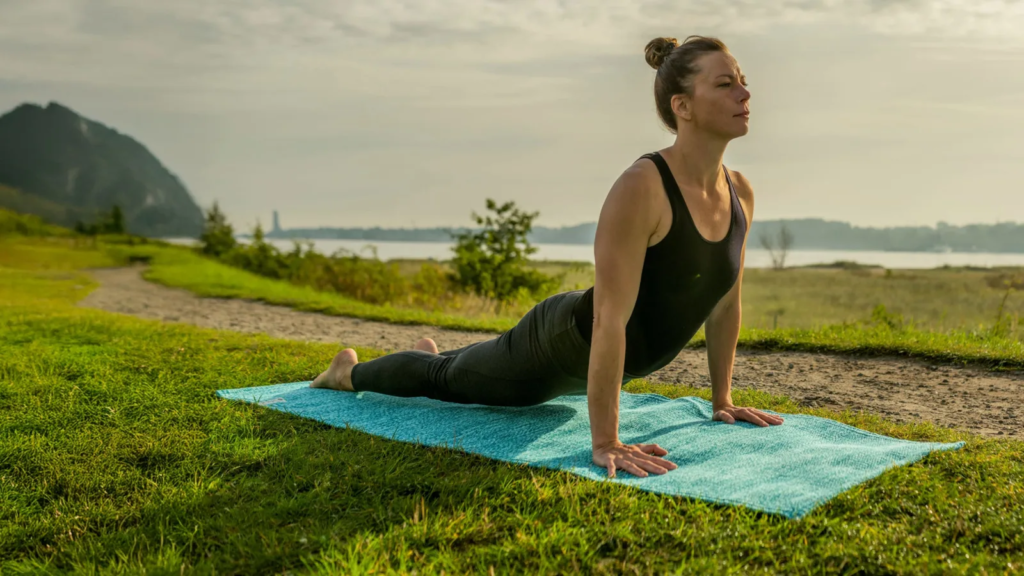
What it is:
Vinyasa Yoga links poses together in a smooth flow. You move with your breath.
Why it is beginner-friendly:
- Improves coordination
- Builds light strength
- Keeps the class interesting
Things to note:
- Some Vinyasa classes can be fast
- Look for “Beginner Vinyasa” or “Slow Flow”
Who should choose it:
- People who like gentle exercise
- Those who want movement with breathing
- Beginners who already do light workouts
Yin Yoga – Slow and Stretching

What it is:
Yin Yoga holds poses for longer time (1–3 minutes). It focuses on stretching muscles and relaxing the body.
Benefits for beginners:
- Very slow pace
- Improves flexibility
- Reduces stress
- Easy to follow
Who should choose it:
- People who feel stiff
- Those who want relaxation
- Beginners who prefer quiet classes
Restorative Yoga – Deep Relaxation

What it is:
Restorative Yoga uses props like pillows and blankets to support the body. You stay in poses without effort.
Benefits:
- Helps reduce stress
- Supports recovery
- Very gentle
- Good for tired or busy people
Who should choose it:
- People with low energy
- Beginners who want relaxation
- Anyone who wants stress relief
Iyengar Yoga – Focus on Alignment

What it is:
Iyengar Yoga focuses on correct body position and posture. It uses blocks, straps, and chairs for support.
Why it helps beginners:
- Teaches proper form
- Prevents mistakes
- Slow and controlled movements
Who should choose it:
- People who want detailed instruction
- Those who like structure
- Beginners concerned about posture
Kundalini Yoga – Breathing and Awareness

What it is:
Kundalini Yoga combines movement, breathing, and meditation.
Beginner benefits:
- Improves focus
- Encourages calmness
- Builds awareness of breath
Things to know:
- Some chanting may be included
- Choose beginner sessions
Who should choose it:
- People interested in breathing and relaxation
- Beginners who want mind and body balance
Yoga Styles Beginners Should Approach Carefully
Some yoga styles may be harder for beginners and should be tried later with guidance.
Ashtanga Yoga
- Very structured and fast
- Requires strength and flexibility
- Better after gaining basic experience
Power Yoga
- Strong workout style
- High energy
- Not ideal for complete beginners
Hot Yoga
- Practiced in heated rooms
- Can be tiring and uncomfortable
- Beginners should be cautious
How to Choose the Right Yoga Style for You
Ask yourself these simple questions:
- What is my goal?
- Relaxation → Yin or Restorative Yoga
- Fitness → Hatha or Vinyasa
- Posture improvement → Iyengar Yoga
- Relaxation → Yin or Restorative Yoga
- How active do I want to be?
- Low activity → Restorative or Yin
- Moderate movement → Hatha or Vinyasa
- Low activity → Restorative or Yin
- Do I want a calm or energetic class?
- Calm → Hatha, Yin, Restorative
- Energetic → Vinyasa (slow pace)
- Calm → Hatha, Yin, Restorative
- Am I comfortable with group classes?
- If not, try beginner online sessions first
- If not, try beginner online sessions first
Practical Tips for Beginners
- Start with 20–30 minute sessions
- Practice 2–3 times per week
- Wear comfortable clothing
- Use a yoga mat
- Drink water before and after
- Follow beginner classes only
- Stop if something feels painful
- Focus on breathing, not perfection
You can also read “Yoga for Beginners: The Ultimate Guide to Yoga Basics” for step-by-step guidance on poses and breathing.
Mistakes or Limitations
Common Beginner Mistakes
- Choosing advanced yoga styles too soon
- Skipping warm-up
- Holding breath during poses
- Comparing yourself with others
- Practicing without guidance
Limitations to Remember
- Progress takes time
- Flexibility improves slowly
- Results depend on consistency
- Yoga is not a replacement for medical care
FAQ Section
A: Hatha Yoga and Restorative Yoga are the easiest for beginners because they are slow and focus on basic poses.
A: Yes, beginners can practice at home using simple guided videos or beginner programs.
A: A session of 20–30 minutes is enough for beginners.
A: No, flexibility is not required. Yoga helps improve flexibility gradually.
A: Practicing 2 to 3 times per week is a good start.
What This Article Covers
Yoga has many styles, and not all are for beginners
- Best beginner styles include:
- Hatha Yoga
- Vinyasa Yoga (slow pace)
- Yin Yoga
- Restorative Yoga
- Iyengar Yoga
- Hatha Yoga
- Avoid advanced styles like Ashtanga and Hot Yoga at first
- Choose a style based on your goal: relaxation, fitness, or posture
- Start slow, stay consistent, and focus on breathing and comfort
For a complete foundation, read “Yoga for Beginners: The Ultimate Guide to Yoga Basics.”
